
2025 Wrapped! PIDs Edition

By: Nikolas Lamarre, Canadian Persistent Identifier Officer
https://doi.org/10.82389/ezdp-p761
PIDs program
Persistent Identifiers (PIDs) can be a complicated thing to understand, and even harder to explain! Fortunately, CRKN’s dedicated PIDs team was highly active in 2025, both in member support and community outreach. The team participated in more than 20 engagement activities, including presentations, webinars, conference contributions, and international PID initiatives. Many of these activities were delivered in collaboration with Canadian and global partners, underscoring our commitment to shared approaches and community-building across the PID landscape.

A quick explainer: Persistent identifiers are durable digital links that uniquely identify research outputs, people, and institutions. Through our PID Program, we help Canada build reliable, connected pathways to trusted knowledge. Learn more
ORCID-CA
More Researchers Are Connecting with ORCID
ORCID-CA reached 55 member organizations in 2025, reflecting steady engagement across Canada’s research ecosystem. Members come from a range of sectors, including:
- Academic institutions (70%)
- Government and government-adjacent departments and agencies (15%)
- Research organizations (15%)

ORCID Integrations: Growing Reach, Growing Impact
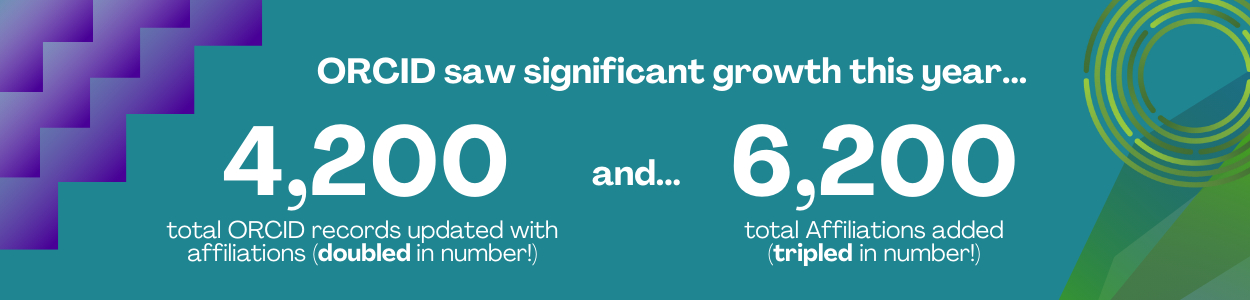
ORCID-CA members added 13 new ORCID API integrations this year, bringing the total across the consortium to 89 integrations. With more systems actively writing to ORCID records, affiliation activity increased significantly: the number of records updated with affiliations doubled, and the total number of affiliations added tripled!
These include updates to employment, education, qualifications, service, memberships, distinctions, and invited positions, reflecting broader and more complete researcher profiles across the consortium.
An FYI for researchers: Why is it important to have your own ORCID-iD? Let our Canadian Persistent Identifier Community Manager, John Aspler, tell you!
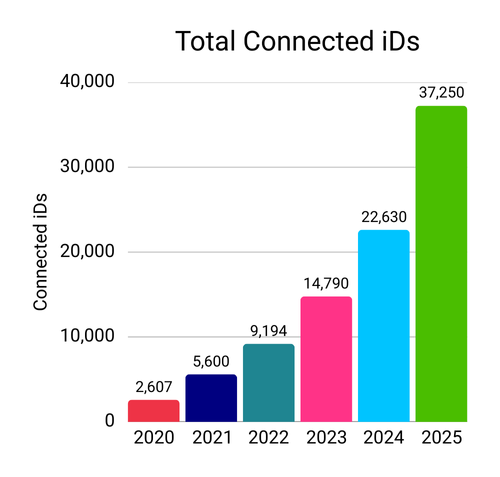
The number of connected IDs, which counts each researcher only once no matter how many integrations they use, also grew substantially this year, with the annual increase doubling compared to 2024!
Canadian Funders’ Integrations: A Breakthrough Year
Funder engagement with ORCID-CA reached new heights in 2025.
This growth reflects increased interest from funders, particularly as two major organizations launched new integrations—an important indicator of how persistent identifiers are becoming deeply embedded in funding workflows nationwide:
- Convergence (SSHRC & NSERC) became the top-ranked ORCID-CA integration for connected users with over 4,200 authenticated researchers.
- FRQNet (Fonds de recherche du Québec) ranked third with more than 3,000 connected users and, notably, added over 120 funding activities to researchers’ ORCID records.

Together, these integrations signal a national shift toward adopting ORCID IDs, ROR, and DOIs in funding processes, reducing administrative burden for researchers and enhancing metadata quality across Canada.
DataCite Canada
The DataCite Canada Consortium Turns Five!
As the DataCite Canada Consortium (DCAN) celebrates its fifth anniversary, engagement and community participation continue to grow. DCAN’s community of practice, supported in partnership with the Digital Research Alliance of Canada (the Alliance), saw strong momentum throughout 2025.
Canadian leadership in the global PID ecosystem was also strengthened this year with the election of John Aspler, Manager of the Canadian PID Community, to the DataCite Board of Directors in April, expanding Canada’s voice in international PID strategy and governance.

Welcoming 14 New Members
DCAN has welcomed a huge number of new members this year, growing from 76 to 90 institutions, with 118 repositories – 23 more than at the end of 2024. This expanding community spans a wide range of organizations across Canada’s research landscape:
- Research and infrastructure groups (45%)
- Academic institutions (42%)
- Government and government-adjacent departments and agencies (13%)

Showcasing DCAN Activity
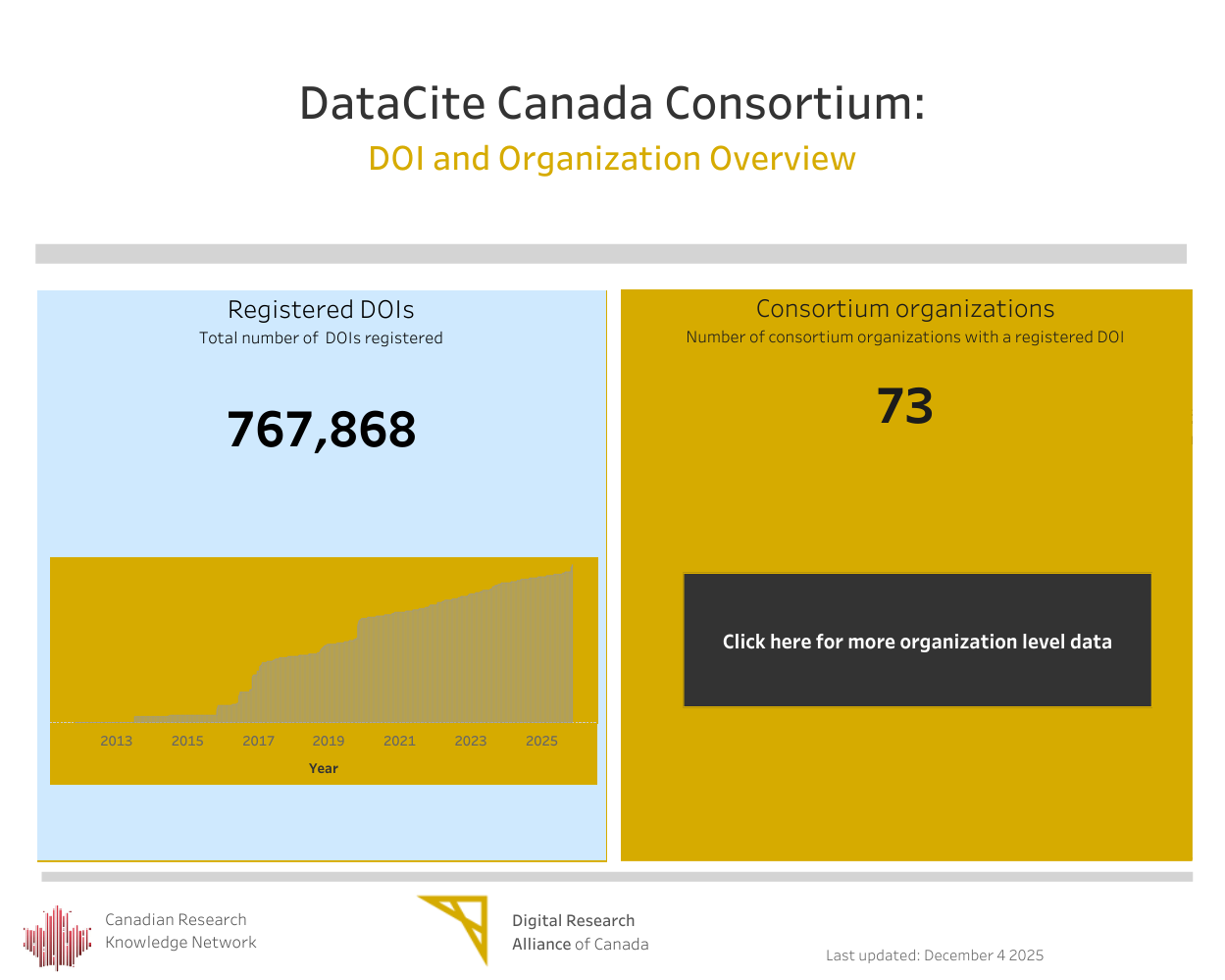
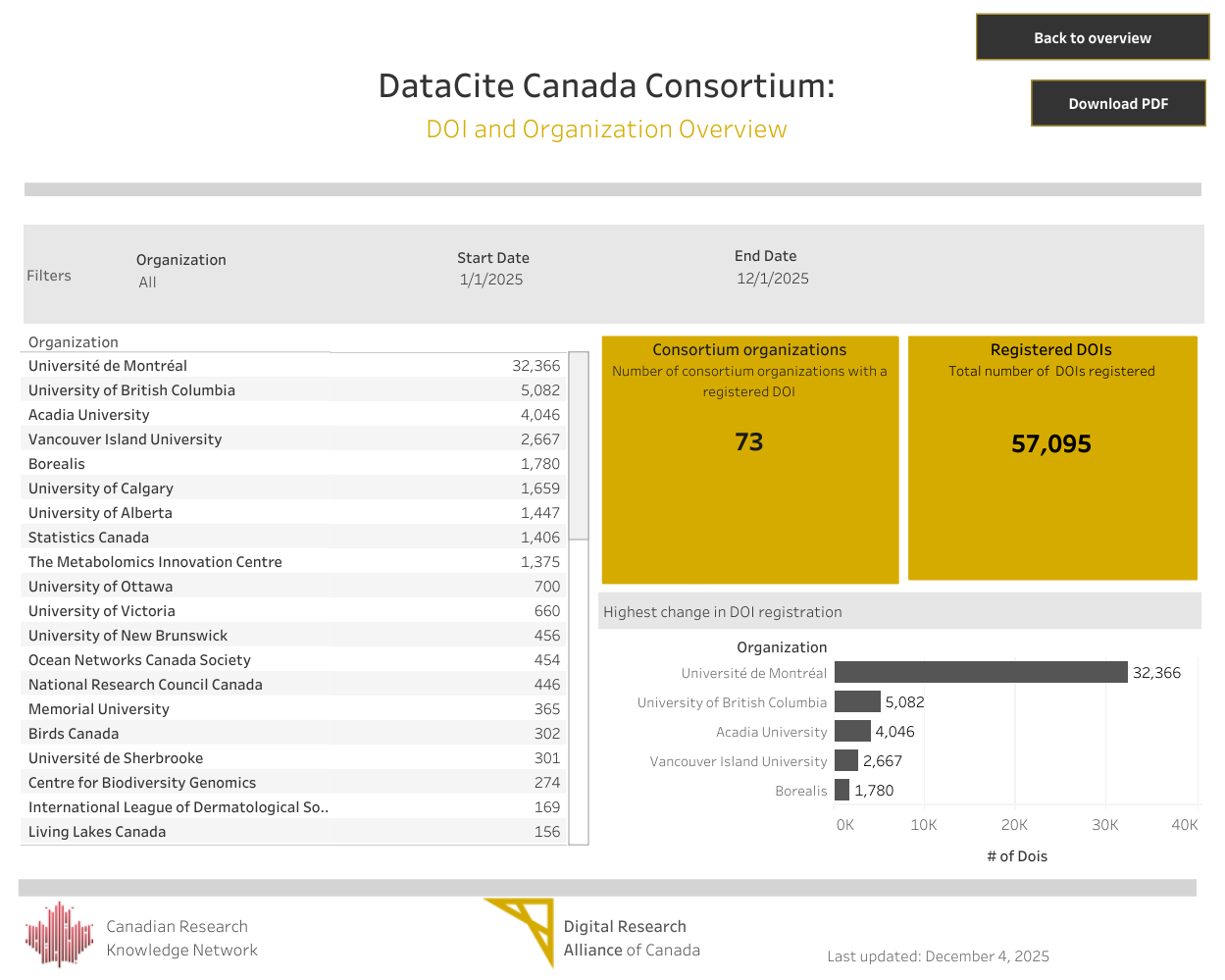
This year, we continued work on new tools to better showcase and visualize consortium activity. As part of this effort, our colleagues at the Alliance developed the DataCite Canada Metrics Dashboard, designed to make DOI registration data easier to explore and report to our PIDs committees and, eventually, to provide insight to the broader Canadian research community.
Building a Connected Research Future
In 2025, the growth across ORCID-CA, DataCite Canada, and CRKN’s broader PID Program demonstrated what’s possible when Canada’s research community invests in shared, trusted infrastructure. From researchers and repositories to funders and international partners, momentum toward persistent identifiers is accelerating—and strengthening the integrity, visibility, and global reach of Canadian scholarship.
As we look ahead to 2026, we remain committed to advancing the Canadian PID Strategy, reducing administrative burden, improving metadata quality, and supporting open, reliable pathways to knowledge.
Here’s to another year of partnership, innovation, and progress across Canada’s evolving PID ecosystem!

Nikolas Lamarre (https://orcid.org/0009-0008-5603-8098)
Nikolas has a CILIP-certified MSc in Book History and Material Culture (University of Edinburgh). He has experience working in cultural heritage on both sides of the Atlantic.