
Recognizing Professional Activities with ORCID’s Affiliation Manager

Guest post by: Kaela Ramhit, ORCID US Community, Lyrasis
https://doi.org/10.82389/ywt2-3v97
On September 17, 2024, the ORCID US Community consortium and ORCID-CA consortium welcomed their communities to discuss some uses for ORCID’s Affiliation Manager, including how Lyrasis in the US and the Canadian Research Knowledge Network (CRKN) in Canada are using the ORCID Affiliation Manager to recognize community contributions, employment affiliations, and other professional activities. John Aspler, Manager of the Canadian Persistent Identifier Community at CRKN, and Sheila Rabun, Senior Strategist of Research Infrastructure Programs at Lyrasis, shared some examples of how a smaller organization could take advantage of the ORCID Affiliation Manager.
This blog will describe how two smaller organizations, CRKN and Lyrasis, have been using the ORCID Affiliation Manager and will share some strategies and considerations for how best to use this tool.
For readers interested in these presentations, case studies, and webinar, the Community Call was recorded and made available online: Community Call: ORCID Affiliation Manager.
For readers who are new to the Affiliation Manager, we recommend reading this brief overview before reading this blog: A Brief Overview of the Affiliation Manager.
CRKN Uses Affiliation Manager to write Board Service Affiliations
The Canadian Research Knowledge Network, or CRKN, joined the Canadian ORCID consortium, which they administer, in June 2021. CRKN is a small organization which currently has just over 30 employees; they mainly deal in negotiations and licensing with publishers on behalf of Canadian academic libraries. They also run a persistent identifier (PID) program in Canada, which includes their DataCite Canada consortium and ORCID-CA consortium. CRKN is a not for profit organization governed by a board of directors.
CRKN’s initial use of the Affiliation Manager was informal and meant to test the tool in preparation for future demonstrations to ORCID-CA consortium members. However, ORCID then released the Affiliation Report via the ORCID Member Portal in March of 2022. This report includes a full list of everyone who has publicly affiliated themselves with an ORCID member organization. While reviewing this report for CRKN, Aspler noticed that some of CRKN’s committee and board members had added their membership to their ORCID records as a Service affiliation. This encouraged Aspler and CRKN to think about the different ways they could take advantage of the Affiliation Manager tool to recognize these contributions.
“We have many different committees and boards, and it suddenly appeared to us that maybe this was an opportunity to run a project in an area of professional activity affiliation that maybe isn’t as represented in ORCID period, and certainly through the Affiliation Manager” (Aspler, 17:58).
As of September 2024, CRKN has written 58 affiliations to 42 ORCID records. 36% of those are employment for CRKN staff, and 64% of those are service affiliations for current PID committee members (members of the ORCID-CA Governing Committee, DataCite Canada Governing Committee, and the Canadian PID Advisory Committee (CPIDAC) - as well as some members of a few other CRKN Boards). Currently, they have written to all the ORCID records of the current ORCID-CA and DataCite Canada Governing Committee members, and are working on writing to ORCID records of past committee members, all CPIDAC members, and committees beyond those governing PIDs at CRKN.
Aspler shared that one other advantage to using the Affiliation Manager was the opportunity to be consistent in how an organization’s name is expressed in ORCID. CRKN is an organization with a bilingual name, one in English and one in French, including two acronyms. At the time that they were pushing these affiliations, the only option in ORCID’s manual affiliation drop-down menu was the English title, and in order to include all the metadata and the ROR ID in a manually-added affiliation, you could only get that information by using the English title. CRKN wanted to include both languages in their title, and this was possible with the Affiliation Manager. An example of this is shown below, in Figure 1.
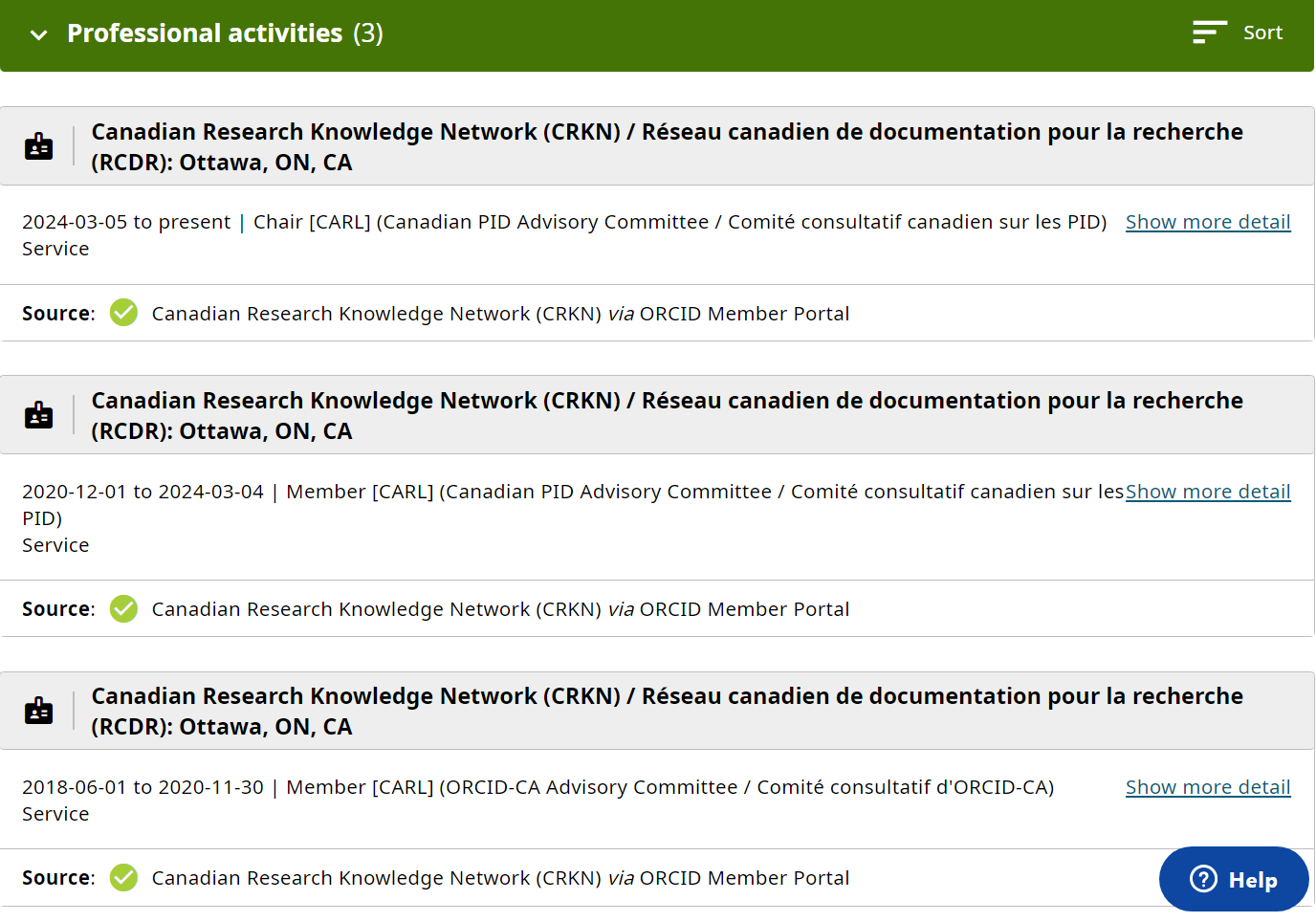
Figure 1: an image of an ORCID record showcasing CRKN Board Service written via the CRKN ORCID Affiliation Manager
ORCID and the Affiliation Manager also support separate entries for different job titles/appointments at the same organization. For example, John Aspler was promoted from ORCID Canada Community Manager (shown in Figure 2) to Manager of the Canadian Persistent Identifier Community (shown in Figure 3).
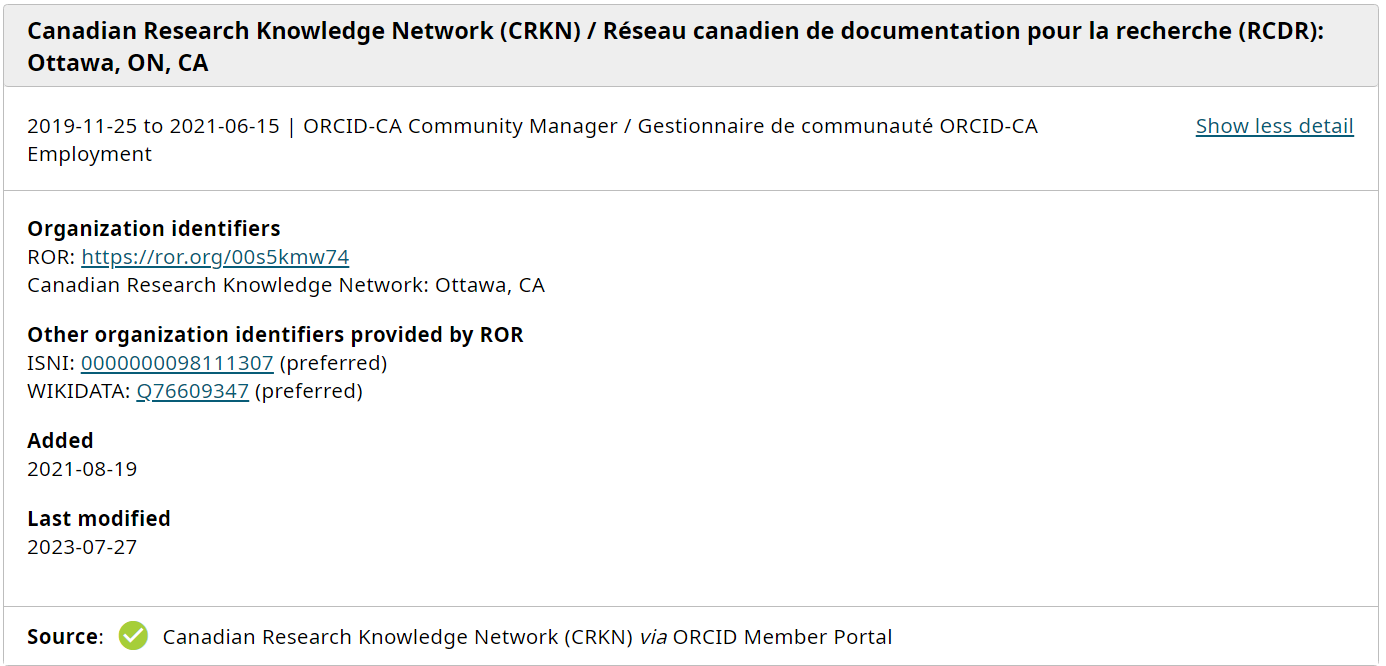
Figure 2: an example of an ORCID record employment entry showing CRKN as the source, with the job title as “ORCID-CA Community Manager”
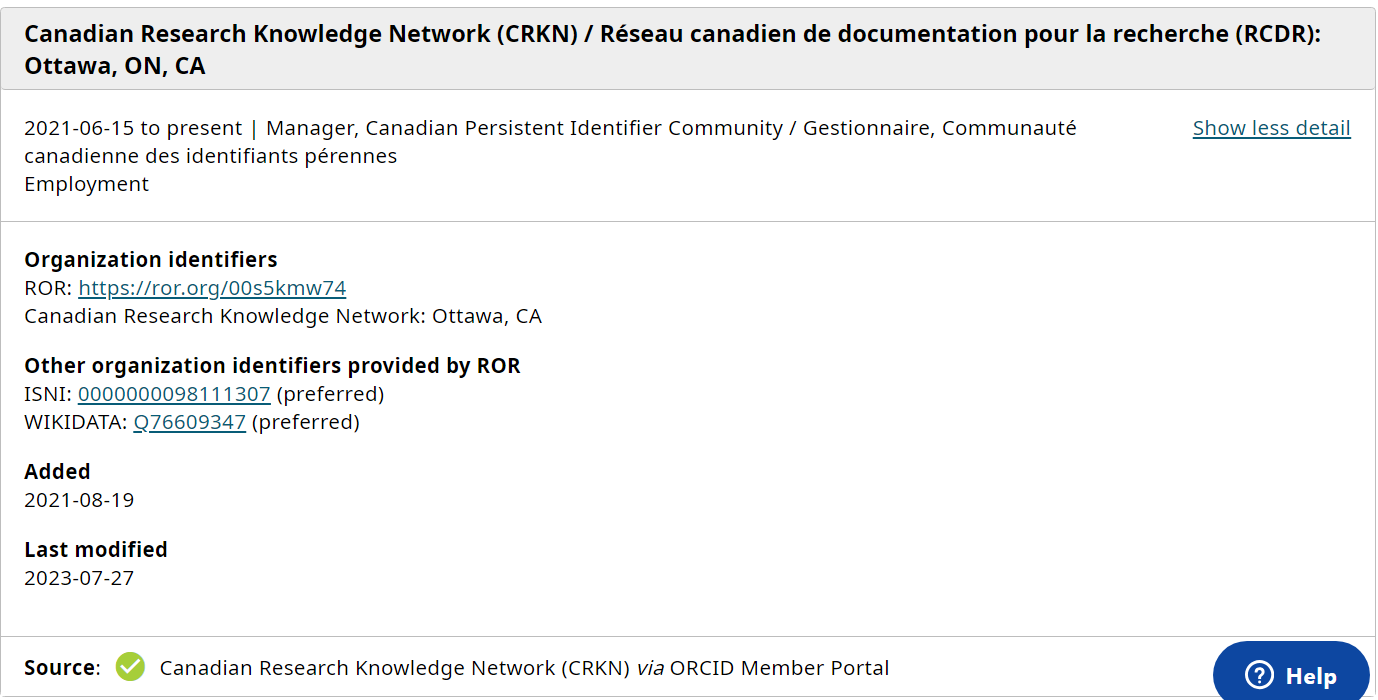
Figure 3: an example of an ORCID record employment entry showing CRKN as the source, with the job title as “Manager”
For the future, Aspler intends to explore systematically writing Board and Committee Service beyond just the three PID committees associated with CRKN.They also intend to begin writing distinctions, specifically for their Ron MacDonald Outstanding Service Award.
“It’s very limited in scope, but it’s also doing something that we think only we can do, and it’s something we’re pretty excited about doing” (Aspler, 22:10).
Lyrasis Uses Affiliation Manager to Write Volunteer Service and Distinctions
Lyrasis is a 501(c)(3) non-profit organization that works with libraries, museums, archives, and the research community to collaborate and provide access to academic, scientific, and cultural heritage. Lyrasis is the organizational home of several open source communities, the ORCID US Community, the Lyrasis DataCite US Community, and more.
Lyrasis joined ORCID on August 1, 2024. Sheila Rabun expressed her excitement to use the Affiliation Manager as a tool for recognizing volunteers and volunteer contributions from the different programs at Lyrasis. As a pilot, they began using the Affiliation Manager to write service affiliations for individuals who volunteered to give a presentation or moderate a discussion for the ORCID US Community and Lyrasis DataCite US Community, and IRUS US programs, as well as distinction affiliations for individuals who had received an ORCID US Community award from 2018 to present.
As of March 31, 2025, out of the 121 affiliations pushed, 66 (54.5%) were accepted and are visible in ORCID records.
“Doing it this way, those green check marks, ORCID calls them trust markers, because it kind of shows other stakeholders that, yes, the organization is confirming that this person is, in fact, affiliated with the organization. And so it’s a good example that a lot of people in our community who have volunteered now have this, and they can show other people at their organization” (Rabun, 33:13).
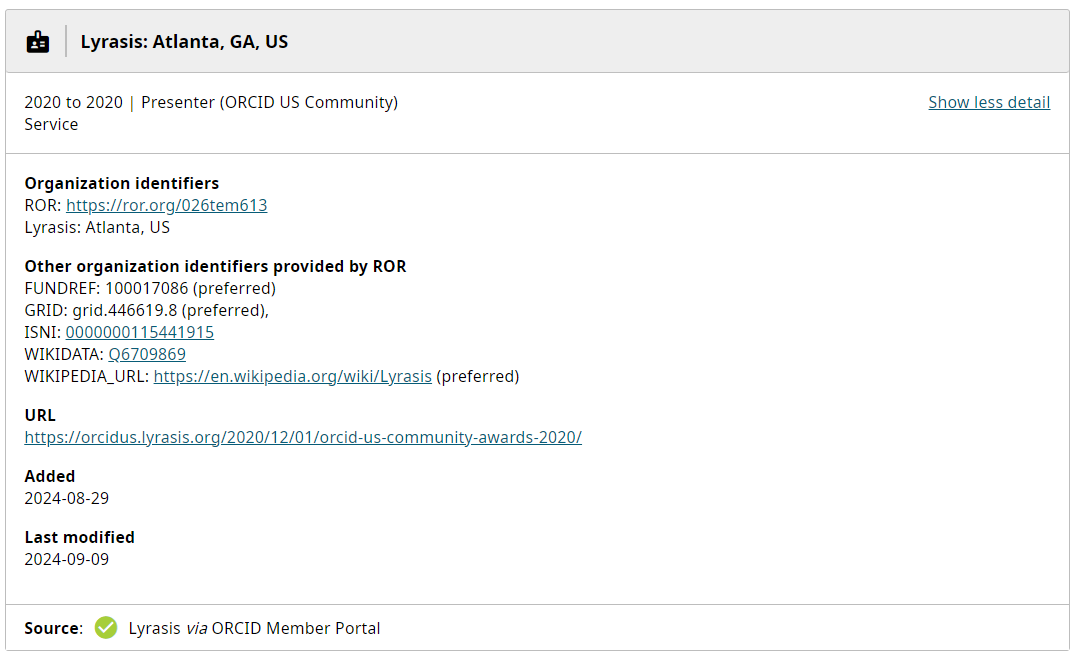
Figure 4: an example of a service entry in an ORCID record pushed from Lyrasis via the Affiliation Manager
Gathering the data for pushing these initial affiliations was a relatively easy task; they already kept a record of all the volunteers for each year (a backlog of about 80 people from 2018-2023). However, one challenge, Rabun shared, was they needed to track down email addresses for some volunteers from early years who had left their old organization and no longer had the same email address. As a smaller organization, this is a unique case as most organizations that use the Affiliation Manager will likely only be working with current researchers or employees, and not necessarily volunteers outside of their organization.
Another challenge was deciding how they wanted to represent service affiliation information. They decided to use the term “presenter” and not to specify which webinar or event their volunteers presented at in order to keep all pushed records standardized. For distinctions, they included the title of the awards.
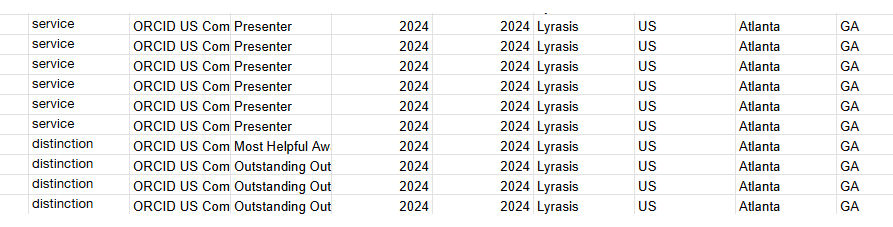
Figure 5: an example of a CSV file including affiliation information for ORCID US Community service and distinctions
They also decided to include a url link, an optional field in the Affiliation Manager. On the ORCID US Community website, there are blogs that list all the volunteers and community awards for each year. They added these links to the ORCID records to add more legitimacy to the service and distinctions that they are pushing.
Rabun described how the biggest challenge they faced was how they would send the Affiliation Manager permission links. They came up with two options: (1) use a mail merge or similar system, or (2) send emails from a personal email address.
For the ORCID US Community, they used a mail merge tool called Constant Contact, working with the Lyrasis Member Communications team to make the emails more official, succinct, and to ensure that the source of the emails came from Lyrasis. This required several rounds of testing. They also decided to make the Affiliation Manager authorization links into tinyurls (a url shortener) so they were more approachable.
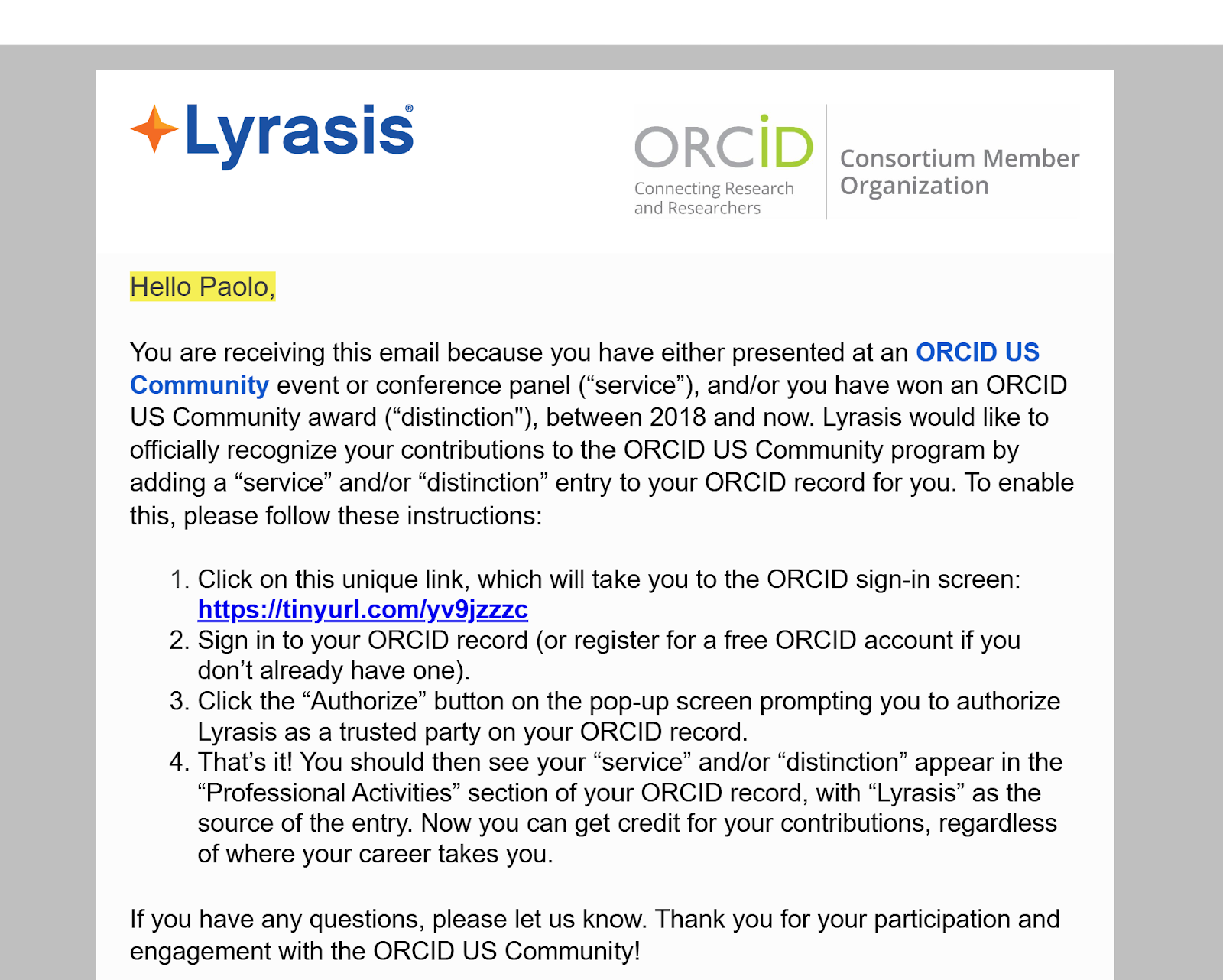
Figure 6: an example of an email sent from Lyrasis via a mail merge to volunteers and award winners
For IRUS and DataCite Community emails, Rabun sent those manually from her own email address. There were only 10 volunteers she needed to reach out to, so sending these emails personally was not a huge burden.
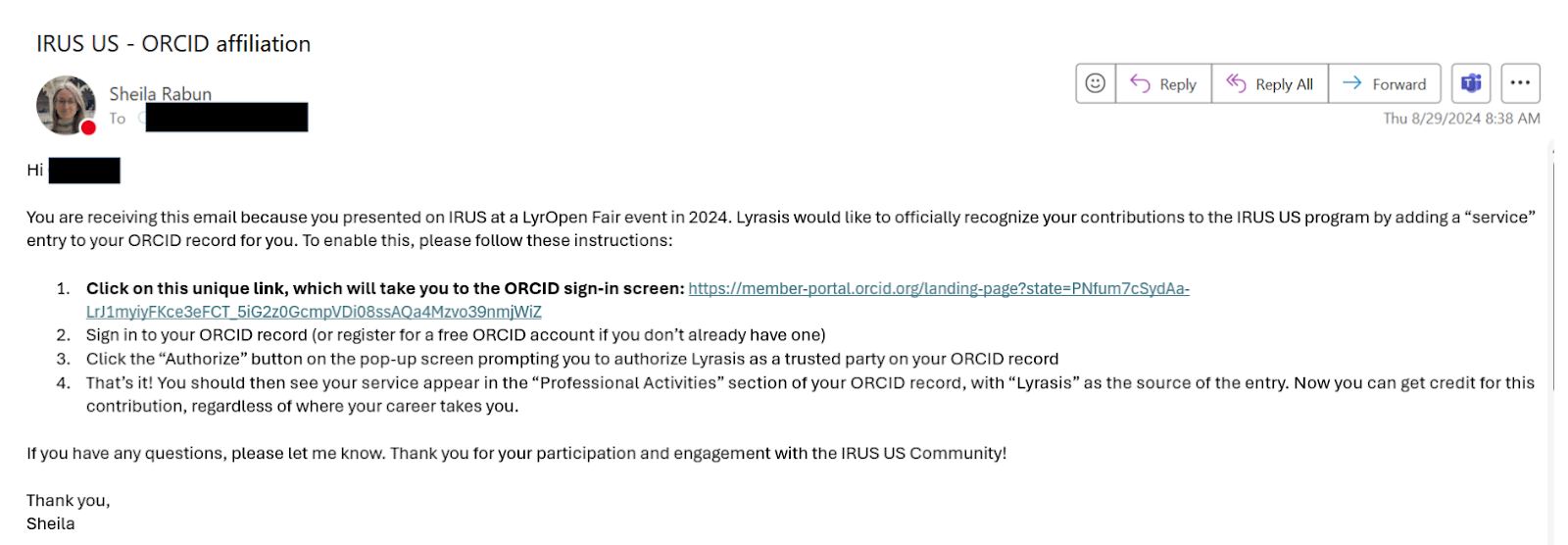
Figure 7: an example of an email sent from a personal address to volunteers
Rabun expressed her excitement that some individuals who received and approved the Affiliation Manager entries from their participation in the ORCID US Community have reached out to her sharing how they are getting inspired to start trying to use the Affiliation Manager at their organizations.
As of July 1, 2025, Lyrasis has begun to use the Affiliation Manager to write employment affiliations to Lyrasis staff ORCID records with plans to expand the use of the Affiliation Manager to writing more “Professional Activities” affiliations, such as writing Board service for Lyrasis Board members, more volunteer service from other Lyrasis programs, and writing staff distinctions/awards.
Strategies and Considerations
Both John Aspler from CRKN and Sheila Rabun from Lyrasis shared some strategies that organizations should consider when utilizing the ORCID Affiliation Manager:
- Start with the information that you have and focus first on what you can control.
- Create a formula/workflow that can be replicated by other areas of your organization.
- Ensure you have a strategic plan for updating records over time.
- Consider how you want to represent job titles and different roles over time.
- What version of your institutional name do you want to employ?Consider being consistent across entries; if name changes, this will make this easy to fix.
- Consider characters in different languages and how to manage them (Excel formats impact dates, for example).
- Ensure researchers are aware of their visibility settings. An item will need to be made “public” in a researcher’s ORCID record to be visible, even if it appears as “in ORCID” in the Affiliation Manager tool dashboard.
- Iteratively roll out to other units/projects/departments at your organization instead of trying to do everything at once.
“It can maybe seem a little overwhelming or daunting to think about pushing affiliations to every single person at your organization. So my recommendations would be, no matter where you’re located at your organization, try to just start with what you can control” (Rabun, 33:50).
Resources
For organizations interested in using ORCID’s Affiliation Manager, the ORCID US Community has created an in-depth guide for using this tool; this how-to guide includes some recommendations, strategies, examples and templates.
For researchers and organizations wishing to learn more about the ORCID Affiliation Manager, here are some additional helpful resources:
- Affiliation Manager
- Affiliation Manager Guide
- ORCID Member Portal
- Affiliation Manager Request Form
- Integration Guide
- Common Systems for ORCID Integration
- Blog: University of Georgia Uses Affiliation Manager to Generate ORCID iD Adoption Amongst Graduate Students
- Blog: Recognition in Open Science: How Stanford University is Using the ORCID Affiliation Manager to Recognize Distinguished Researchers
For more helpful resources on the Affiliation Manager, check out the Affiliation Manager tag within the ORCID US Community’s Resource Library.
For other ORCID-related resources, case studies, presentations and webinars, check out the ORCID US Community’s Resource Library.

Kaela Rahmit (https://orcid.org/0009-0007-9013-5775)
Kaela Ramhit serves currently as a staff member of the Lyrasis ORCID US Community Program. In her previous position, she worked as a member of the University of Florida, George A. Smathers Libraries as the Evening Programming and Instruction Library Assistant. In this role, she assisted in providing instructional resources to academic students, coordinated workshops, and maintained evening library operations. Kaela served as a member of George A. Smathers Accessibility Committee and as a liaison to the Disability Resource Center at the University of Florida. With a focus in improving accessibility services, Kaela has presented at multiple conferences, to peers, and facilitated services to students on best practices for creating accessible material.